Technology Overview
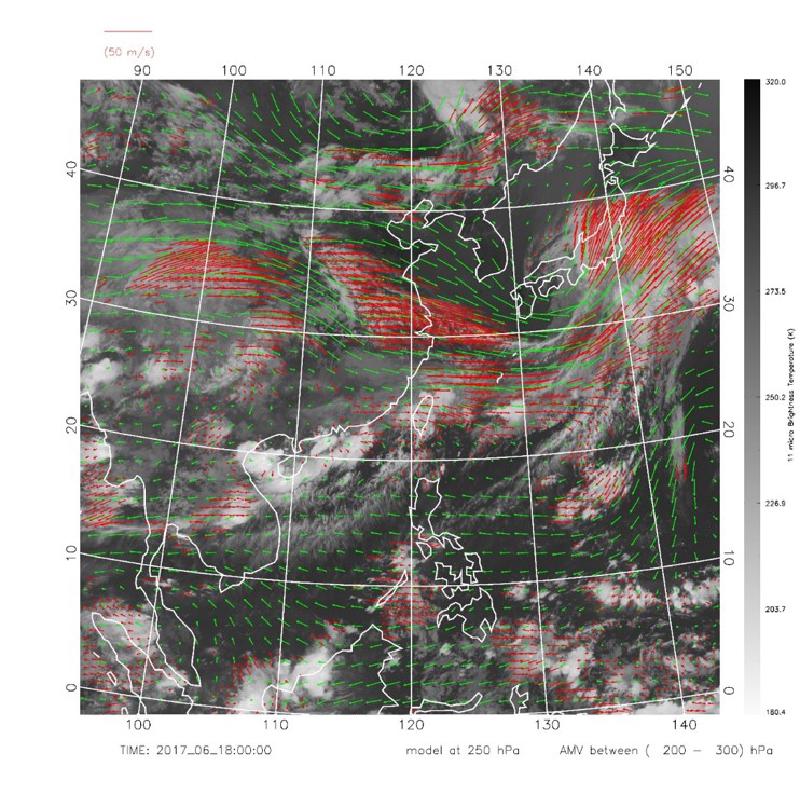
Atmospheric Motion Vector (AMV) retrieval technology uses cloud-motion features in sequential satellite imagery and combines Particle Image Velocimetry (PIV) concepts with image tracking techniques to estimate atmospheric flow-field motion vectors. By calculating cloud displacement across sequential images, the method obtains large-area and spatially continuous wind-field distributions that serve as an important basis for atmospheric dynamics analysis and cloud-drift wind product generation.
This technology can be applied to weather monitoring, typhoon analysis, severe convective system tracking, numerical weather prediction data validation, and atmospheric environmental research, improving large-scale atmospheric motion observation and analysis capability.
Technical Architecture
The technical architecture covers satellite image acquisition, image preprocessing, cloud feature recognition, displacement tracking analysis, atmospheric motion vector retrieval, and result visualization. The system extracts cloud-motion information from sequential satellite imagery and uses correlation matching and vector calculation methods to estimate cloud-layer movement direction and speed.
The complete workflow establishes an analysis chain from raw satellite observation data to atmospheric motion vector outputs, supporting cloud-drift wind product generation and subsequent atmospheric dynamics analysis.
Cloud-Drift Wind Retrieval Results
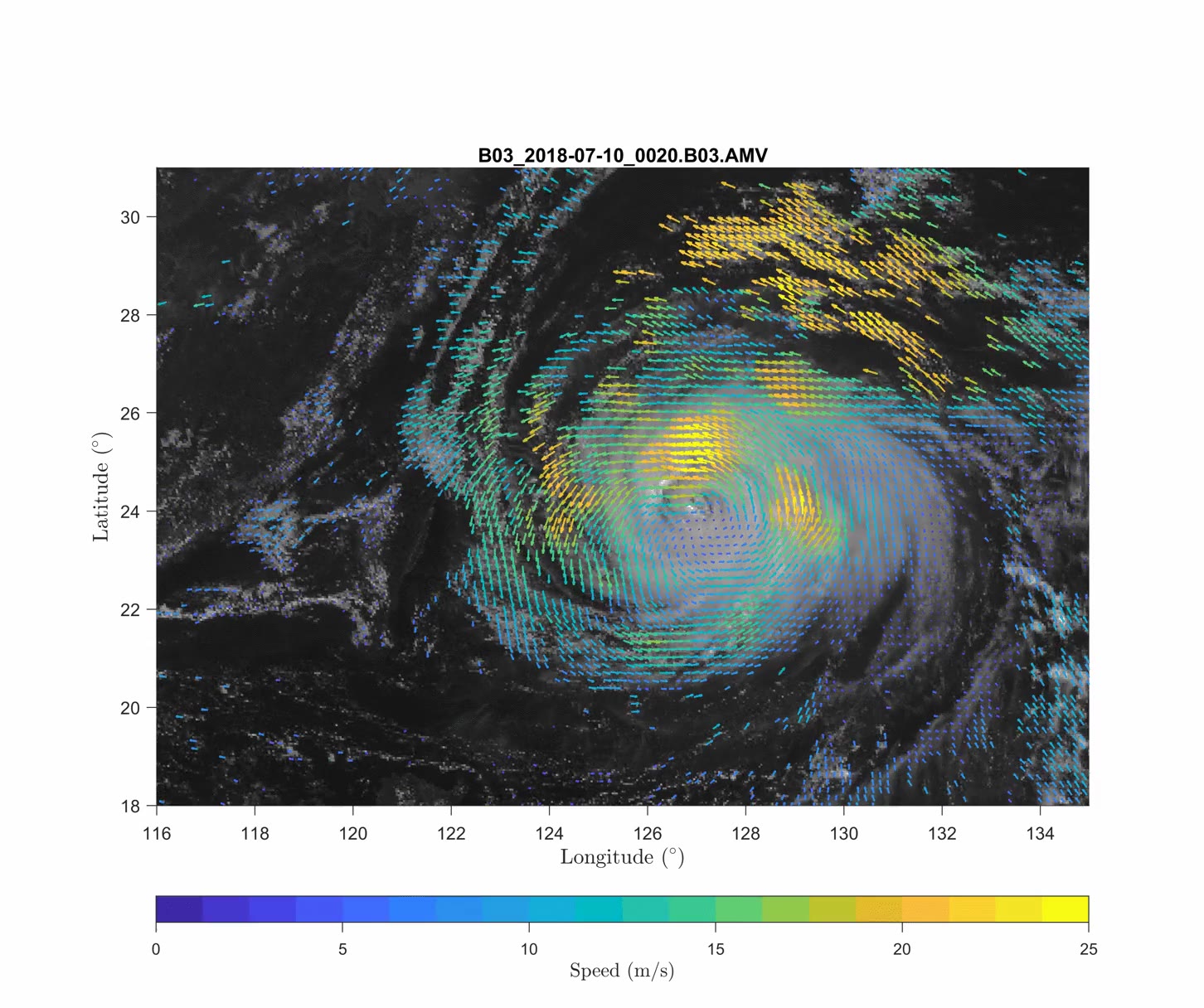
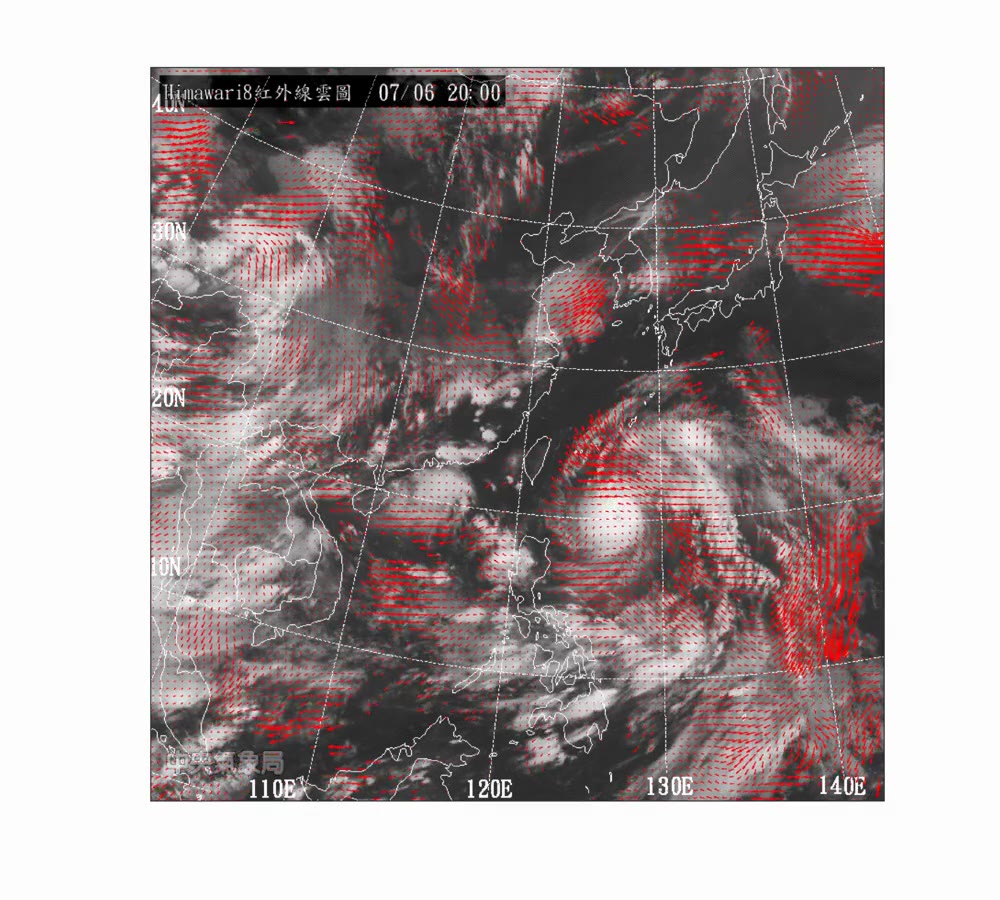
Cloud-drift wind retrieval results show cloud-motion tracking and vector-field distributions from sequential satellite imagery, visualizing atmospheric flow direction and speed characteristics across different regions. Through cloud-drift wind product analysis, users can effectively understand the development trends and spatial distribution characteristics of large-scale weather systems.
These results can be used not only for weather monitoring and forecasting operations, but also as important reference information for atmospheric circulation research, typhoon dynamics analysis, and extreme weather event monitoring.
Validation Results
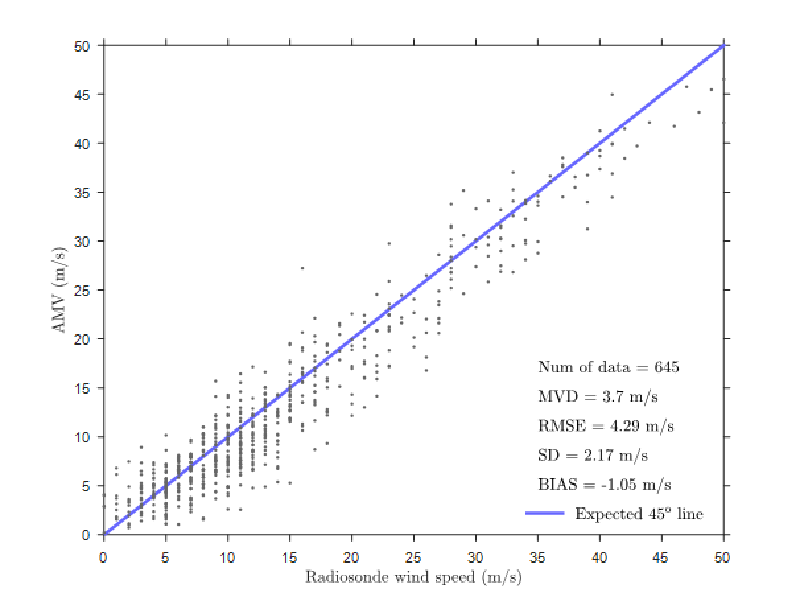
Validation results present comparative analysis between atmospheric motion vector retrieval outputs and reference data, including wind speed, wind direction, and vector distribution assessment. Through statistical analysis and error evaluation, the stability, accuracy, and applicable range of the retrieval workflow can be examined.
The validation results show that this technology can effectively extract cloud-motion information and reconstruct atmospheric flow-field characteristics. It can serve as a reliable tool for cloud-drift wind product generation and atmospheric dynamics research, while providing a basis for subsequent algorithm optimization and application development.