Wave Generation System and Focused Wave Generation Technology
Wave generation system: The Neptune Wave Flume is a wave testing facility with high-precision control capability. It supports the generation of regular waves, irregular waves, focused waves, and other wave conditions. Through wave-group focusing technology, the system controls wave components of different frequencies to converge at a specified location and time, reproducing the instantaneous high-energy impact characteristics of extreme wave events.
Focused wave generation technology: This technology provides high repeatability, high stability, and strong controllability. It can precisely control breaking-wave location, breaker type, and impact intensity, reproducing extreme waves and breaking-wave events observed in real marine environments. The technology can be applied to coastal engineering, hydraulic structures, offshore facilities, and wave impact loading research, providing a high-quality scaled physical model testing environment.
The system supports related hydrodynamic experiments and numerical model validation, providing experimental baseline data for marine engineering design and disaster prevention assessment.
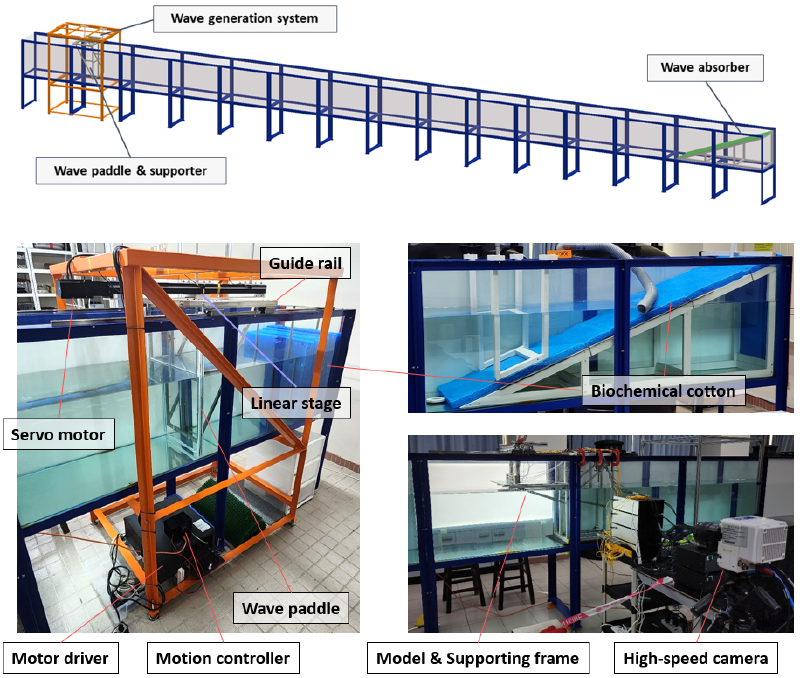
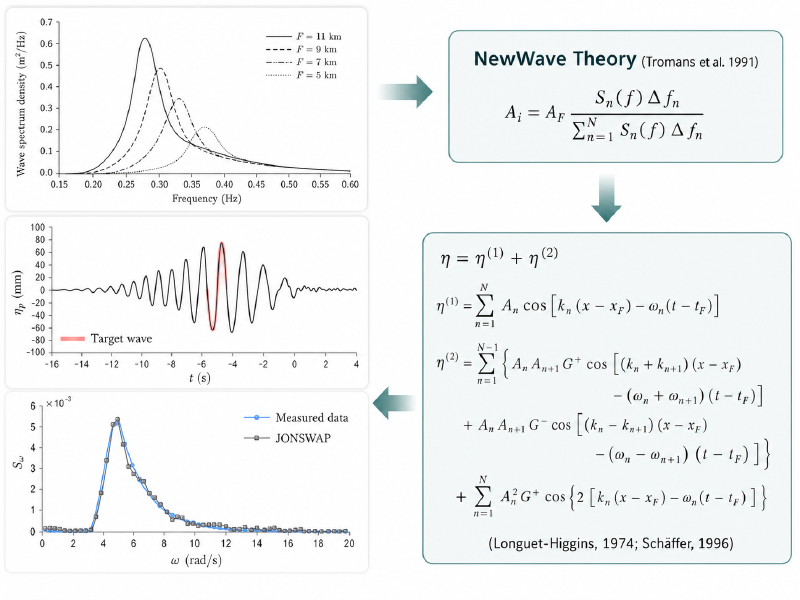
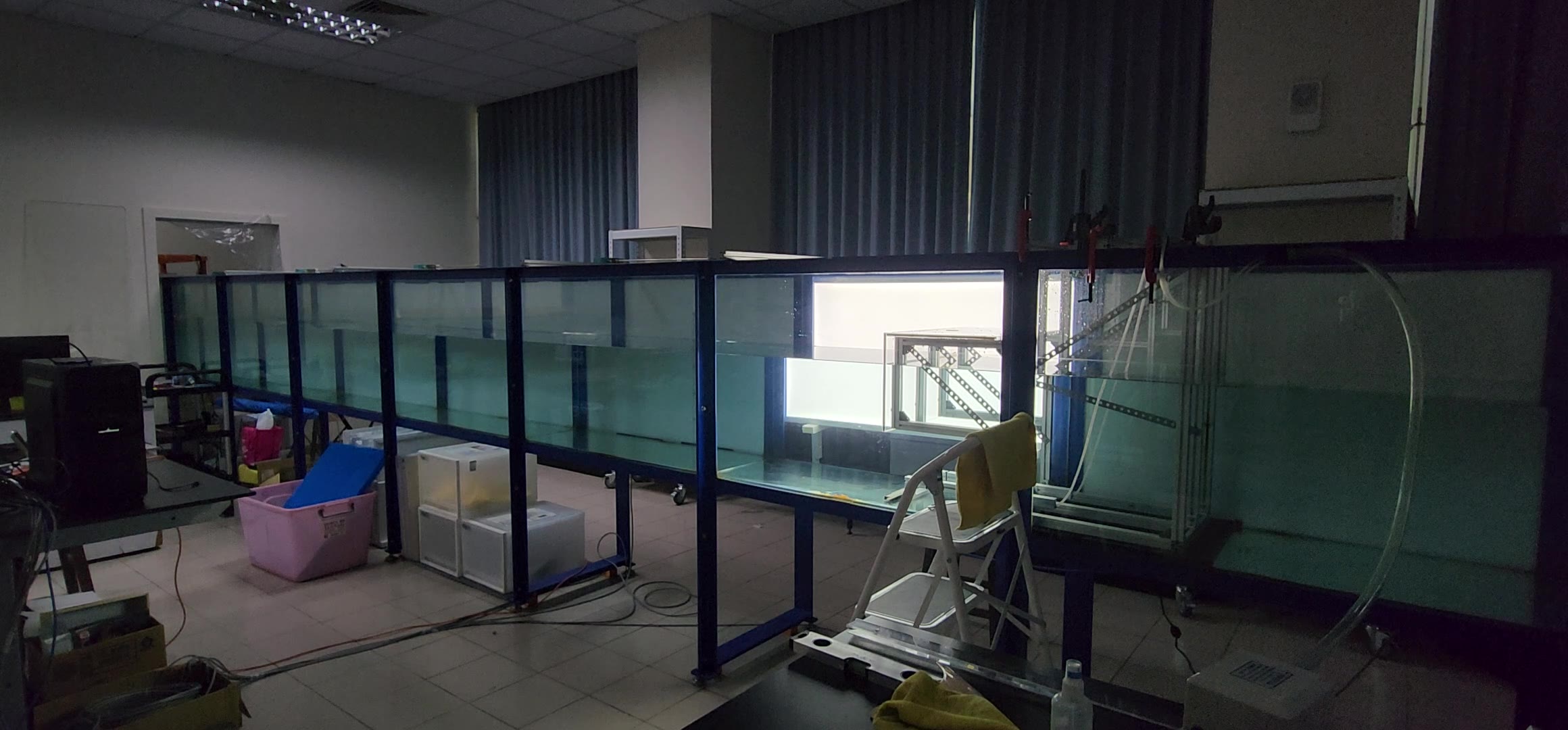
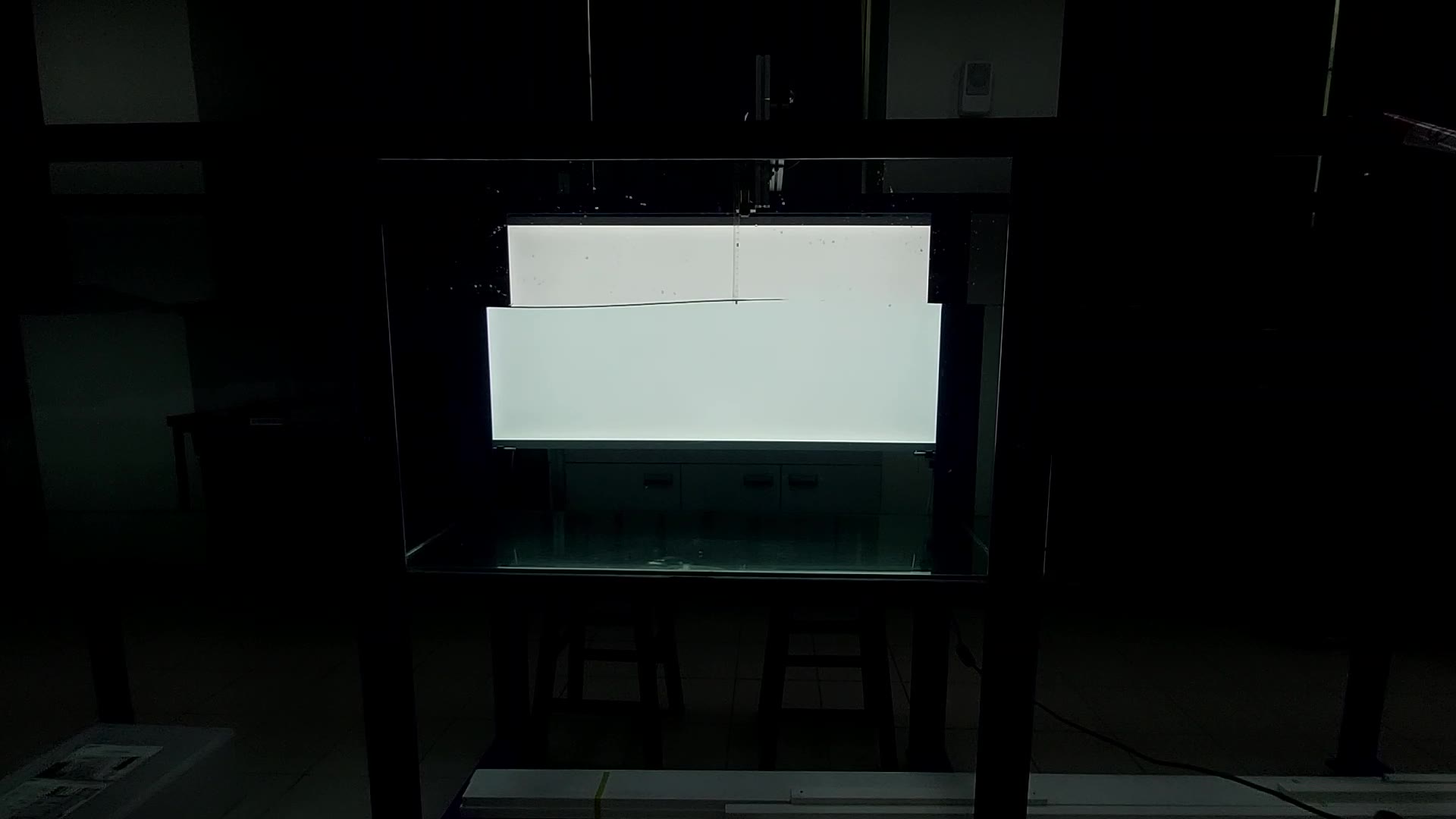
Image Velocimetry Technology
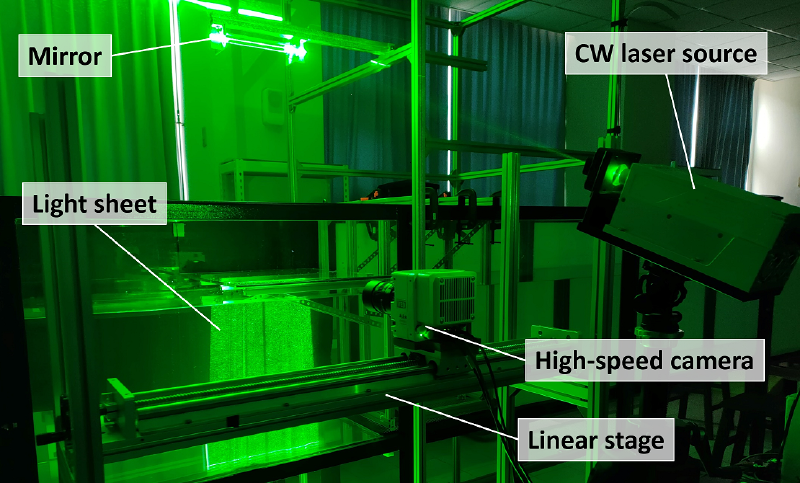
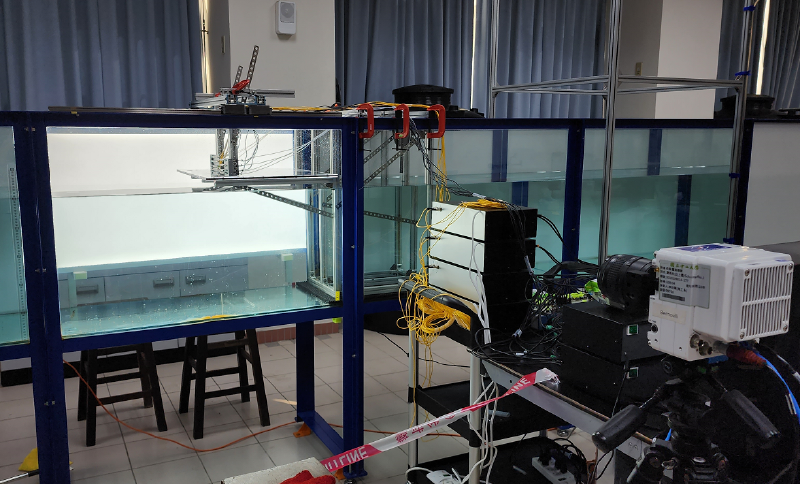
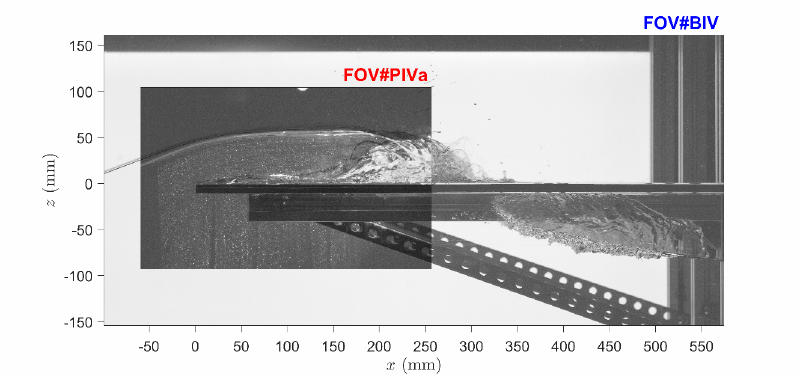
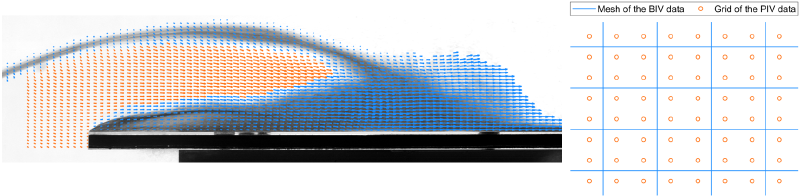
Image velocimetry technology uses high-speed imagery and digital image processing methods to perform non-contact measurement of flow-field velocity and flow structures. The technology covers Particle Image Velocimetry (PIV) for single-phase flow-field analysis and Bubble Image Velocimetry (BIV) for bubbly, multiphase, and breaking-wave flow-field analysis.
The system integrates PIV and BIV analysis algorithms to automatically identify different tracer features in the flow field, calculate velocity vectors, and reconstruct flow fields. In addition to obtaining instantaneous velocity distributions, it can further analyze vortex structures, turbulence characteristics, flow-field evolution, and wave-current interaction, providing important hydrodynamic information.
The technology can be applied to wave flume experiments, breaking-wave flow-field research, multiphase flow analysis, river and marine flow measurement, and environmental fluid mechanics research, providing high-spatiotemporal-resolution flow-field measurement results.
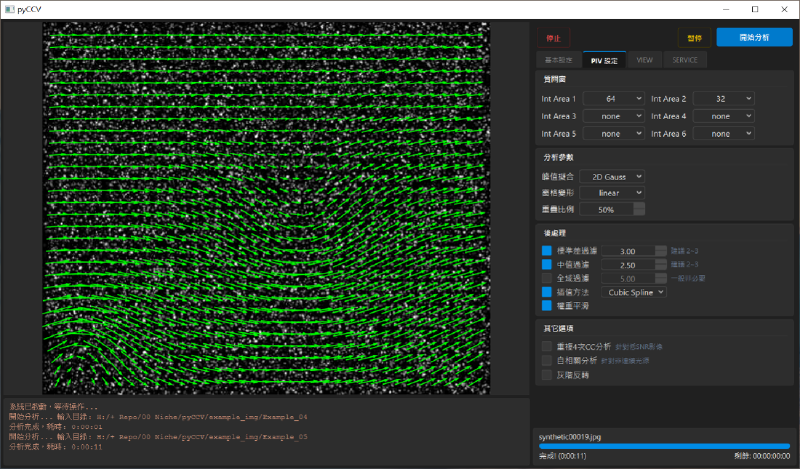
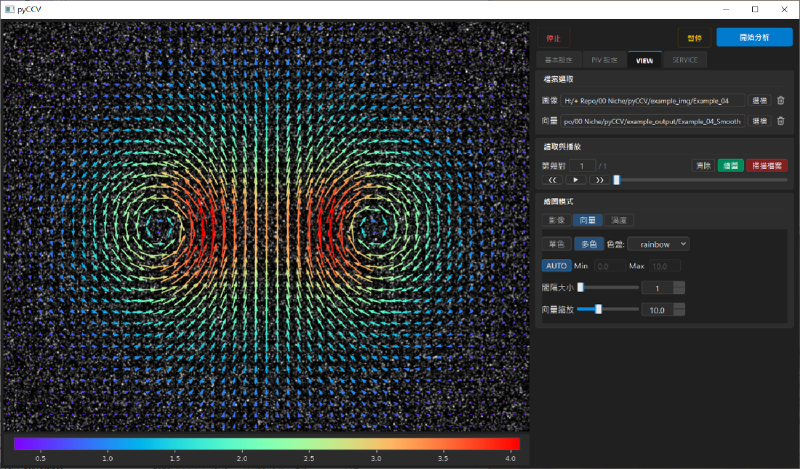
pyCCV Image Velocimetry Software
pyCCV (Python Cross-Correlation Velocimetry) is an independently developed image velocimetry software platform built on Fast Fourier Transform (FFT)-based cross-correlation analysis, providing an efficient and extensible flow-field measurement platform.
The software supports PIV, BIV, and related image tracking analysis functions, including image preprocessing, cross-correlation calculation, vector validation, flow-field post-processing, and result visualization. Through a modular architecture, analysis functions and data processing workflows can be extended according to different research needs.
pyCCV is developed on the Python platform and supports multicore CPU parallel computing, effectively improving processing efficiency for large image datasets. The system combines usability, flexibility, and high performance, making it suitable for academic research, engineering experiments, and flow-field measurement applications.