Technology Overview
UAV water quality sampling technology combines an unmanned aerial vehicle with an independently developed water sampling module to establish a sampling system with high mobility, high spatial resolution, and low contamination risk. The system can be applied in wetlands, estuaries, nearshore waters, and ship-based operating environments where conventional sampling is difficult, supporting surface water sample collection missions.
Compared with traditional manual sampling, UAV sampling technology can effectively improve operational safety and sampling efficiency, reduce personnel exposure to complex environments, and minimize disturbance and contamination of monitored areas during sampling, providing more representative water quality monitoring data.
System Architecture and Specifications
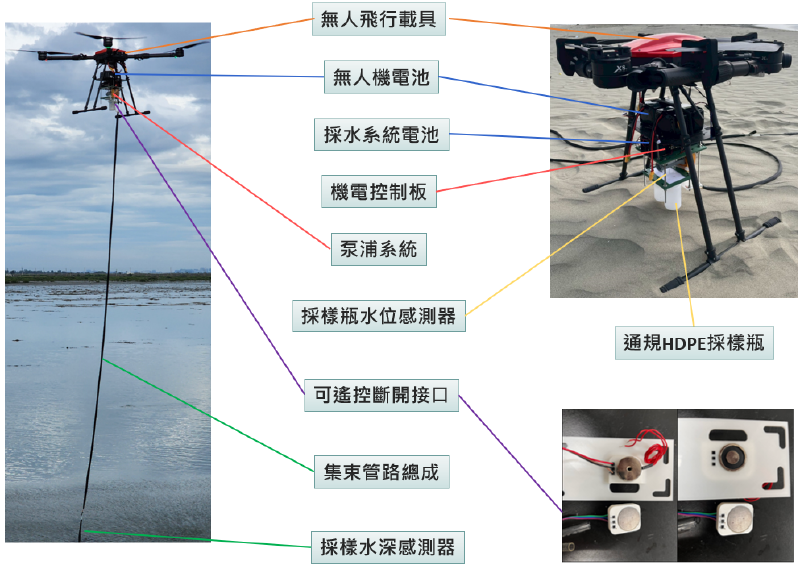
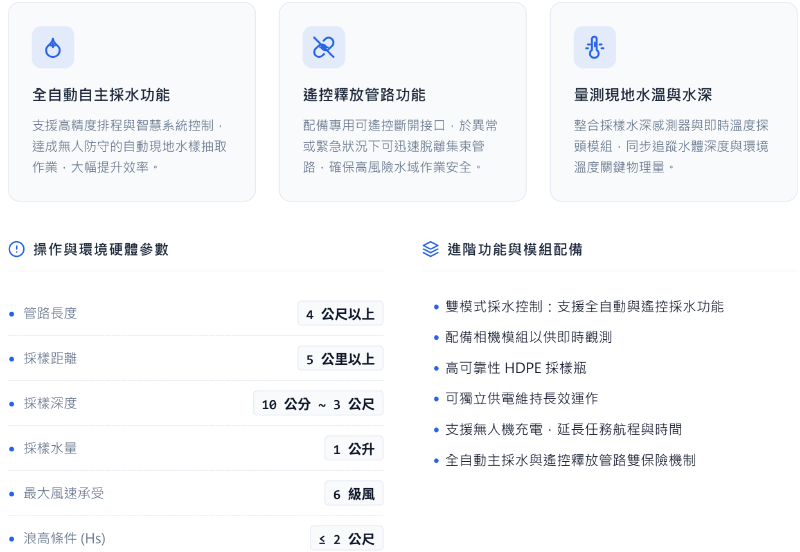
The system architecture mainly includes a UAV platform, an autonomous sampling module, a mission control system, and field operation workflows. The sampling module can be rapidly deployed and replaced according to mission requirements, and it works with the flight control system to execute fixed-point hovering, automatic sampling, and return procedures.
The technical specifications cover vehicle configuration, sampling capacity, operating altitude, positioning accuracy, and mission execution workflow. Together, they present the system design architecture and key performance indicators as a basis for operational planning and application across different monitoring sites.
Field Validation Records
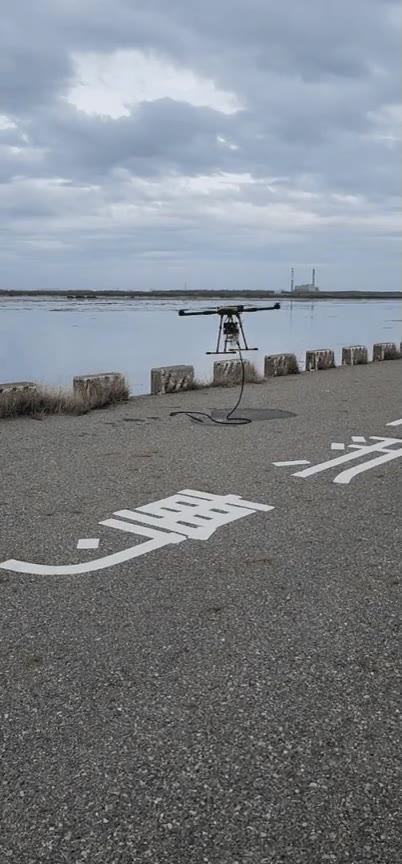
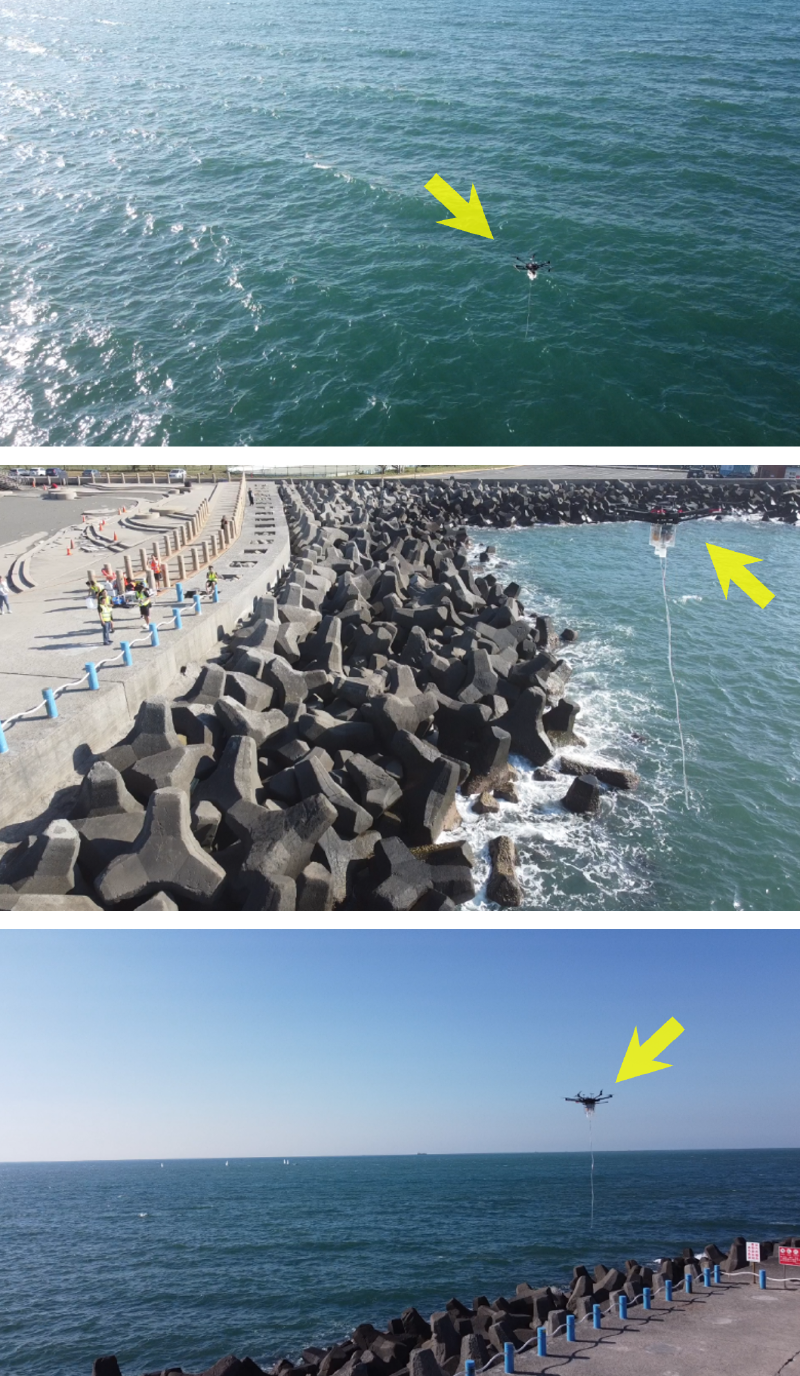
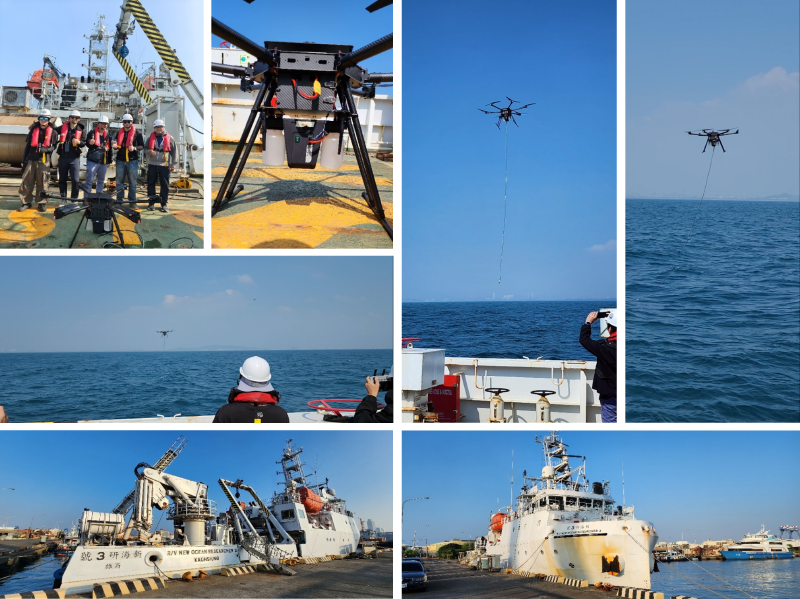
To validate operational capability under different environmental conditions, this technology has completed multiple field tests at Qigu Wetland, Sizihwan, and offshore Linyuan. The tests covered shoreline sampling, wetland environmental sampling, shipboard takeoff and landing, and fixed-point offshore sampling to evaluate flight stability, sampling success rate, and field operation workflows.
The test results show that the system can perform sampling missions reliably across diverse aquatic environments. With advantages in rapid deployment, precise positioning, and safe operation, it can serve as an effective tool for marine environmental monitoring, water quality surveys, pollution tracking, and research sampling.